HORRY ICE ComPANY ICE HOUSE
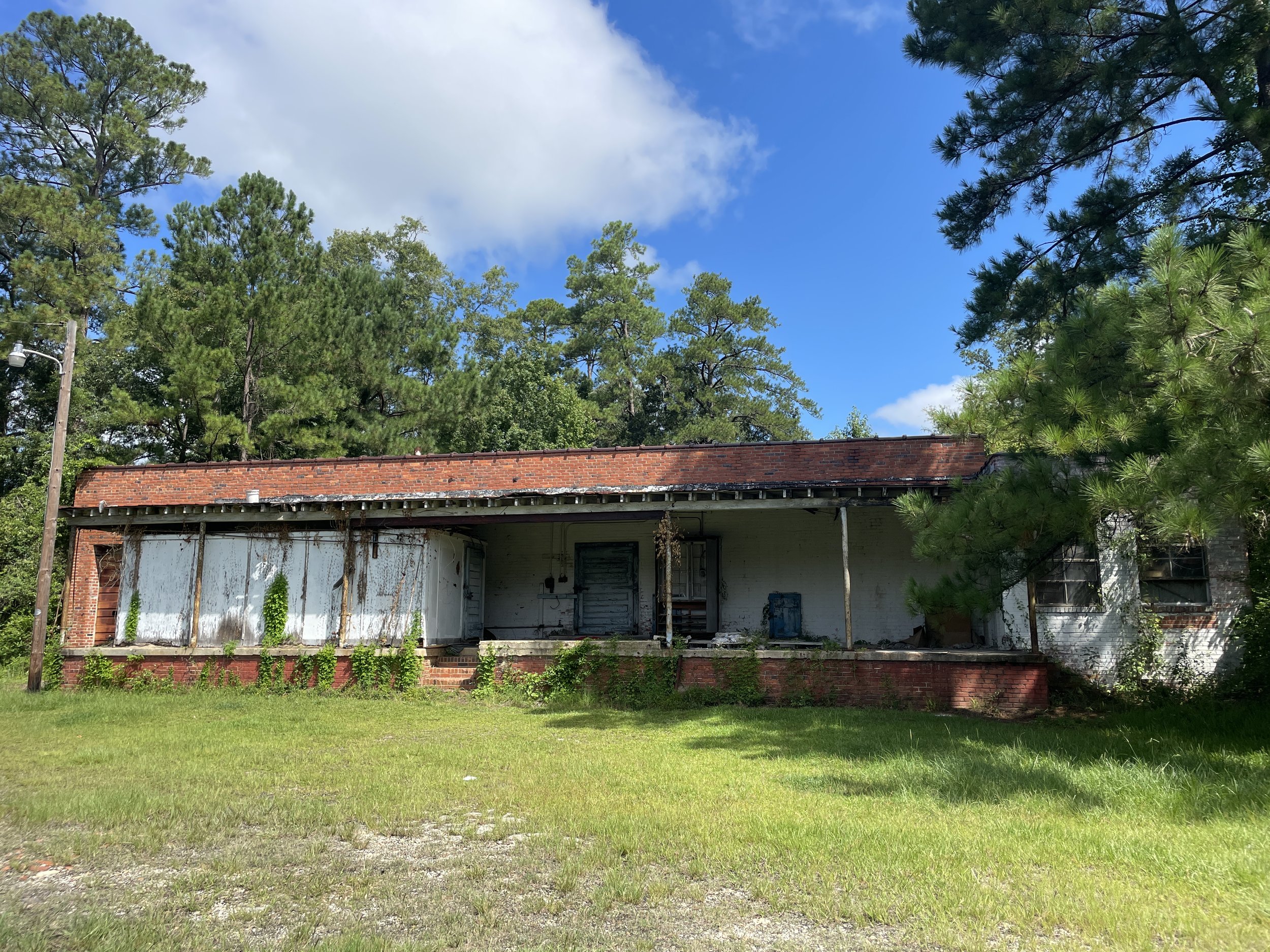
After receiving a grant from the National Trust for Historic Preservation, the Conway Architectural Salvage and Heritage Project hired LPC to complete archival research on the Horry Ice Company Ice House.
Horry Ice Company was established in 1946 by a World War II veteran as one of three industrial properties in the postwar Mayfair neighborhood of Conway, South Carolina. The Ice House functioned as one economic backbone in the neighborhood for 40 years before closing. In 1988, the Icehouse property was purchased by the adjacent historic McIver-Shaw Lumber Company, which is historic in its own right.
The purpose of this research was to identify the local significance that will be utilized in the future to apply for a National Register designation, as well as state and federal preservation tax credit applications to ultimately rehabilitate the building. It is our professional opinion that a case may be able to be made to support a nomination under Criteria A: property is associated with events that have made a significant contribution to the broad patterns of our history in the area of post-World War II commerce with local significance. Our suggested period of significance would span from 1948 – 1976, as those dates are supported by the Ice Company’s active operation. The surrounding neighborhood was developed as a subdivision called Mayfair in 1939, after the area was annexed into the city the year prior. This neighborhood’s development was directly tied to industrial businesses along the railroad tracks, including companies like Creel Oil and Gas, H.P. Little's Brick Manufacturing, McIver-Shaw Lumber Company, and Horry County Ice Company. The residences were constructed to provide worker's cottages for the employees of the industrial businesses. The original homes were typically one-story wood frame houses in a "Minimal Traditional" style. Due to the age and integrity of the residential, commercial and industrial resources of the neighborhood, the entirety of the Mayfair neighborhood may be considered eligible for the National Register of Historic Places.